
By embedding MaxDiff insights into your pitch decks, roadmaps, and investor updates, you are not just telling a story — you are proving it with customer-centric data.
Pre-Seed & Seed Stage
Clarifies early product-market fit:
MaxDiff can identify what features, use cases, or pain points customers value most— validating assumptions in your pitch.
Shows rigorous customer discovery:
Investors gain confidence when they see that you’ve gone beyond anecdotal feedback and used structured methods to understand the market
Series A (Growth Focus)
Prioritizes roadmap based on data:
You can show that you’re allocating resources toward features with the highest
perceived value to your target users.
Refines target segments:
Different segments can be analyzed to reveal what each values most—helping tailor
GTM (go-to-market) strategies
Series B & C (Scaling)
Supports strategic decisions at scale:
Use MaxDiff to validate which new features or regions to expand into—grounding growth decisions in data.
Demonstrates customer-centric culture:
A structured feedback loop signals maturity in decision-making and reduces perceived risk
IPO Readiness
Optimizes positioning and messaging:
MaxDiff can test which brand values, benefits, or product claims resonate most, informing investor presentations and public comms.
Validates TAM (Total Addressable Market) focus:
Helps investors believe your long-term vision is anchored in real customer preferences, not just market size speculation.
1. Prioritize the Right Features
MaxDiff ranks features based on real user preferences, so you build what matters most and avoid unnecessary extras
5. Test Ideas Early
Use MaxDiff to check if your feature ideas match real user needs — before building anything.

2. Tailor to Each Segment
Run MaxDiff for different user
groups to see what each one values.
This helps you decide whether to focus on one main group or serve several
3. Weigh Value Against Effort
Match MaxDiff scores with development effort to spot quick wins – features that deliver high value with low effort
1. Prioritize the Right Features
MaxDiff ranks features based on real user preferences, so you build what matters most and avoid unnecessary extras
2. Tailor to Each Segment
Run MaxDiff for different user
groups to see what each one values.
This helps you decide whether to focus on one main group or serve several
3. Weigh Value Against Effort
Match MaxDiff scores with development effort to spot quick wins – features that deliver high value with low effort
4. Cut Internal Bias
Use data to guide decisions instead of relying on opinions from the loudest voices or highest-paid people.
5. Test Ideas Early
Use MaxDiff to check if your feature ideas match real user needs — before building anything.


© 2025 AXYZ Analytics
Case Title
Background
L’étiquette d’une bouteille de vin est essentielle, capable à elle seule d’augmenter les
ventes ou de soutenir une hausse de prix sans impacter la demande.
Problem
Un graphiste a créé 14 étiquettes potentielles, mais laquelle aura le plus desuccès?
Solution
C’est le consommateur qu’il faut questionner! L’analyse MaxDiff permet de déterminer
quantitativement l’ordre de préférence des étiquettes parmi un échantillon de 200-400
consommateurs en comparant les différentes options. Cette méthode résout
efficacement l’incertitude du vigneron
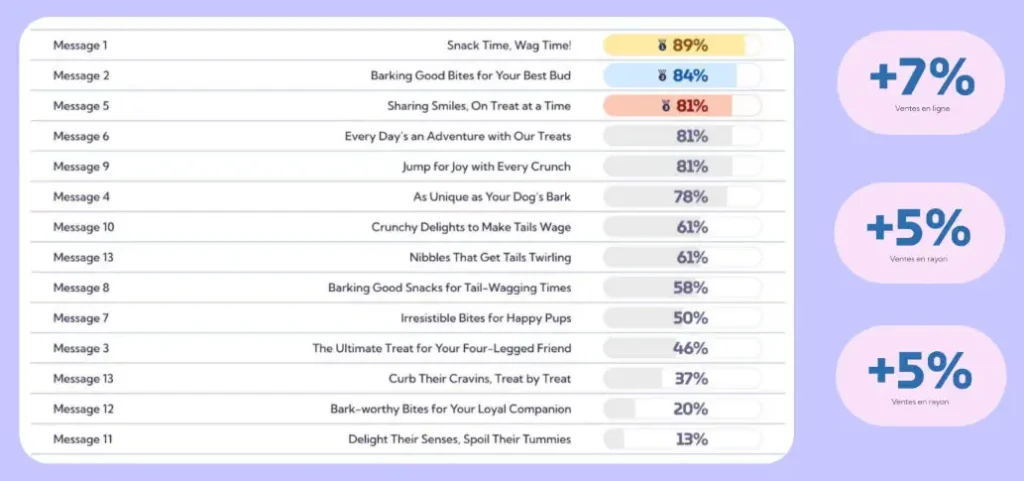
Results
Example of result, some explaination


Yariv Levy, PhD
VP of Technology
Lorem ipsum dolor sit amet, consectetur adipiscing elit, sed do eiusmod tempor incididunt ut labore et dolore magna aliqua. Ut enim ad minim veniam, quis nostrud exercitation ullamco laboris nisi ut aliquip ex ea commodo consequat. Duis aute irure dolor in reprehenderit in voluptate velit esse cillum dolore eu fugiat nulla pariatur. Excepteur sint occaecat cupidatat non proident, sunt in culpa qui officia deserunt mollit anim id est laborum.
Lorem ipsum dolor sit amet, consectetur adipiscing elit, sed do eiusmod tempor incididunt ut labore et dolore magna aliqua. Ut enim ad minim veniam, quis nostrud exercitation ullamco laboris nisi ut aliquip ex ea commodo consequat. Duis aute irure dolor in reprehenderit in voluptate velit esse cillum dolore eu fugiat nulla pariatur. Excepteur sint occaecat cupidatat non proident, sunt in culpa qui officia deserunt mollit anim id est laborum

Moshe Vaizman
VP of Operations and
Business Development
Lorem ipsum dolor sit amet, consectetur adipiscing elit, sed do eiusmod tempor incididunt ut labore et dolore magna aliqua. Ut enim ad minim veniam, quis nostrud exercitation ullamco laboris nisi ut aliquip ex ea commodo consequat. Duis aute irure dolor in reprehenderit in voluptate velit esse cillum dolore eu fugiat nulla pariatur. Excepteur sint occaecat cupidatat non proident, sunt in culpa qui officia deserunt mollit anim id est laborum.
Lorem ipsum dolor sit amet, consectetur adipiscing elit, sed do eiusmod tempor incididunt ut labore et dolore magna aliqua. Ut enim ad minim veniam, quis nostrud exercitation ullamco laboris nisi ut aliquip ex ea commodo consequat. Duis aute irure dolor in reprehenderit in voluptate velit esse cillum dolore eu fugiat nulla pariatur. Excepteur sint occaecat cupidatat non proident, sunt in culpa qui officia deserunt mollit anim id est laborum

Iris Levy
VP of Marketing
Lorem ipsum dolor sit amet, consectetur adipiscing elit, sed do eiusmod tempor incididunt ut labore et dolore magna aliqua. Ut enim ad minim veniam, quis nostrud exercitation ullamco laboris nisi ut aliquip ex ea commodo consequat. Duis aute irure dolor in reprehenderit in voluptate velit esse cillum dolore eu fugiat nulla pariatur. Excepteur sint occaecat cupidatat non proident, sunt in culpa qui officia deserunt mollit anim id est laborum.
Lorem ipsum dolor sit amet, consectetur adipiscing elit, sed do eiusmod tempor incididunt ut labore et dolore magna aliqua. Ut enim ad minim veniam, quis nostrud exercitation ullamco laboris nisi ut aliquip ex ea commodo consequat. Duis aute irure dolor in reprehenderit in voluptate velit esse cillum dolore eu fugiat nulla pariatur. Excepteur sint occaecat cupidatat non proident, sunt in culpa qui officia deserunt mollit anim id est laborum

Cindy Ford, PhD
VP of Customer Success
Lorem ipsum dolor sit amet, consectetur adipiscing elit, sed do eiusmod tempor incididunt ut labore et dolore magna aliqua. Ut enim ad minim veniam, quis nostrud exercitation ullamco laboris nisi ut aliquip ex ea commodo consequat. Duis aute irure dolor in reprehenderit in voluptate velit esse cillum dolore eu fugiat nulla pariatur. Excepteur sint occaecat cupidatat non proident, sunt in culpa qui officia deserunt mollit anim id est laborum.
Lorem ipsum dolor sit amet, consectetur adipiscing elit, sed do eiusmod tempor incididunt ut labore et dolore magna aliqua. Ut enim ad minim veniam, quis nostrud exercitation ullamco laboris nisi ut aliquip ex ea commodo consequat. Duis aute irure dolor in reprehenderit in voluptate velit esse cillum dolore eu fugiat nulla pariatur. Excepteur sint occaecat cupidatat non proident, sunt in culpa qui officia deserunt mollit anim id est laborum

Marc Uldry, PhD
Co-Founder / VP of Product
Lorem ipsum dolor sit amet, consectetur adipiscing elit, sed do eiusmod tempor incididunt ut labore et dolore magna aliqua. Ut enim ad minim veniam, quis nostrud exercitation ullamco laboris nisi ut aliquip ex ea commodo consequat. Duis aute irure dolor in reprehenderit in voluptate velit esse cillum dolore eu fugiat nulla pariatur. Excepteur sint occaecat cupidatat non proident, sunt in culpa qui officia deserunt mollit anim id est laborum.
Lorem ipsum dolor sit amet, consectetur adipiscing elit, sed do eiusmod tempor incididunt ut labore et dolore magna aliqua. Ut enim ad minim veniam, quis nostrud exercitation ullamco laboris nisi ut aliquip ex ea commodo consequat. Duis aute irure dolor in reprehenderit in voluptate velit esse cillum dolore eu fugiat nulla pariatur. Excepteur sint occaecat cupidatat non proident, sunt in culpa qui officia deserunt mollit anim id est laborum


Valerie Severin, PhD
Co-Founder / VP of Finance
Lorem ipsum dolor sit amet, consectetur adipiscing elit, sed do eiusmod tempor incididunt ut labore et dolore magna aliqua. Ut enim ad minim veniam, quis nostrud exercitation ullamco laboris nisi ut aliquip ex ea commodo consequat. Duis aute irure dolor in reprehenderit in voluptate velit esse cillum dolore eu fugiat nulla pariatur. Excepteur sint occaecat cupidatat non proident, sunt in culpa qui officia deserunt mollit anim id est laborum.
Lorem ipsum dolor sit amet, consectetur adipiscing elit, sed do eiusmod tempor incididunt ut labore et dolore magna aliqua. Ut enim ad minim veniam, quis nostrud exercitation ullamco laboris nisi ut aliquip ex ea commodo consequat. Duis aute irure dolor in reprehenderit in voluptate velit esse cillum dolore eu fugiat nulla pariatur. Excepteur sint occaecat cupidatat non proident, sunt in culpa qui officia deserunt mollit anim id est laborum
MaxDiff, or Best-Worst Scaling (BWS), is a remarkably insightful and productive measurement method used widely by researchers and practitioners across social science, business, and other disciplines. It is often preferred over traditional rating scales because it is effective at capturing preferences with known measurement properties.
Here is a comprehensive explanation of Best-Worst Scaling (BWS) and its origins as MaxDiff:
Best-Worst Scaling (BWS) is defined as an extension of the method of paired comparison to multiple choices. The fundamental task requires participants to evaluate a collection, or “set,” containing three or more items or options. From this set, the participant must choose:
The terms “best” and “worst” are considered metaphors representing the extremes of an underlying, latent, subjective continuum of interest.
By collecting both extreme choices from a set, BWS obtains extra choice information. Crucially, this method gathers valuable information about both the attractive options (via the “best” choices) and the less attractive options (via the “worst” choices), providing richer insights into the respondent’s utility function.
The terms MaxDiff and BWS refer to the same technique, though BWS is now the generally accepted name, particularly within academic circles.
A significant benefit of using BWS is its ability to avoid many problems inherent to traditional rating scales.
The conceptual framework underpinning BWS is random utility theory (RUT). RUT assumes that when people choose repeatedly, their observed choice frequencies indicate how much they value the items under consideration.
Analytically, BWS often involves straightforward calculations, making it accessible even for practitioners with minimal prior knowledge. A simple way to summarize the data is by calculating best-minus-worst scores for each option, which is the count of times an item was chosen as “best” minus the count of times it was chosen as “worst”.
These best-minus-worst scores empirically correlate highly with estimates from more sophisticated models, often serving as a sufficient statistic for conditional logit regression models if the MaxDiff model holds.
BWS applications are typically divided into three main classes, differing based on the complexity of the items being evaluated:
Case | Name | Description of Items | Choice Task Focus |
Case 1 | The Object Case | Simple items, objects, statements, or people. | Measuring a list of items on a single underlying subjective scale (e.g., measuring priority, importance, or agreement). |
Case 2 | The Profile Case | Attribute levels described/displayed as a single profile (a combination of attribute levels). | Choosing the best and worst attribute levelswithin a single profile. |
Case 3 | The Multi-Profile Case | Sets of three or more profiles (each profile being a complex combination of attributes and levels, akin to a traditional DCE). | Choosing the best and worst whole profiles (options) among multiple choices. |
In summary, BWS is an invaluable choice-based measurement method that leverages the finding that individuals are highly reliable and accurate when identifying extreme options. It moves beyond the MaxDiff hypothesis to provide a robust framework for measuring subjective preferences.
Reference: Louviere, J. J., Flynn, T. N. & Marley, A. A. J. Best–Worst Scaling:Theory, Methods, and Applications (Cambridge Univ. Press, 2015).

Pierre Uldry, PhD
CEO / Founder
Pierre, originally from Switzerland, began his journey as an economist before transitioning into marketing, statistics, and becoming a self-taught programmer.
He moved to Australia to pursue his PhD at the University of Sydney, studying under the guidance of Professor Jordan Louviere, the mastermind behind BWS, nowadays MaxDiff. In a significant contribution, Pierre introduced the dual response to this technology. With a solid foundation in mathematics, he’s dedicated over two decades to discrete choice modeling, consistently thinking outside the box.
Passionate about movies, running, and his former stint as a Swiss mogul skier, he’s deeply connected to Australia, where he
continues to reside. His expertise in Bayesian Methods has seen him craft processes for diverse industries and tailor models for numerous studies
You: Fill out our form and tell us what you’d like to test.
We: Review your request and confirm feasibility.
You: Join a 30-minute call to discuss your study.
We: Design and launch your study.
You: Approve the quote and study plan.
We: We design and launch the study.
You: Sit back and relax — your insights are on the way.
We: Collect the data, analyze it, and share your report.