MaxDiffPro

Market insights like no others, for all your decision-making

MaxDiffPro is AXYZ Analytics’ solution for MaxDiff (also called Best-Worst Scaling) studies.
It provides tools to design the MaxDiff questions, run data quality checks, estimate models, and report results, so each study meets clear quality and reliability standards.
When needed, we source diverse panels and manage fieldwork to deliver clean, decision-ready outputs.

How MaxDiffPro Solves Your Biggest Challenges?

STRENGTHEN
YOUR BRAND

Discover which logo and brand identity resonate most with your ideal customer profile

Identify which brand label best fits your product

BOOST SALES

Fix the optimal price of your product

Reveal which perks your
customers value most

FOSTER 

RETENTION

Understand the benefits that are important to your employees

Pinpoint which features of your product are the most important to your clients

SPARK 

ENGAGEMENT

 Identify the most effective message to advertise your product

Select the most effective slogan for your political campain

FUEL 

INNOVATION

Discover what eco-friendly elements resonate with your customers to better align your offer

HOTEL USE CASE ???

 AND MORE…

Not sure if your use case can benefit from MaxDiffPro? You might be surprised by how many scenarios this top-notch solution can handle. Don’t hesitate —

just contact us.

Traditional MaxDiff (Best-Worst Scaling) in a Glance

MaxDiff, short for “maximum difference,” is a methodology aimed at evaluating an individual’s preferences across a range of options. Conceived by Professor Jordan Louviere, and originally labelled Best-Worst Scaling (BWS), this approach involves comparing various options to rank them by popularity. This analysis can then be extended to specific groups, such as ‘youth’ or ‘women’, or other targeted sub-populations.

Nowadays the term ‘MaxDiff’ englobes ‘BWS’, especially in marketing, but from an academic point of view, it should be the reverse!

Traditional MaxDiff (Best-Worst Scaling) offers a distinct advantage in gathering precise and reliable data. It enhances the survey experience by prompting respondents to make specific choices, accurately reflecting their real preferences. This method stands in stark contrast to rating scales, which can often yield ambiguous results.

Input

Our Innovations

The Dual Response

Our MaxDiffPro studies can include a “Dual Response” question to enhance the insights we gather. This option is customizable to fit the unique needs of your study.
After identifying the top choice in a MaxDiffPro task, we ask participants a “Dual Response” question to gauge their true commitment to their preference, determining if they would realistically subscribe to, buy, or interact with it.

We tailor Dual Response to fit your study, from assessing willingness to “join” a party, “subscribe” to a gym, to decisions on “buying” or “renting.” The aim is to understand the impact of each option on
your specific outcome.


Advantages:


ADD: add.
ADD: add.

Balanced Design

We use an in-house algorithm to implement a ‘balanced design’ rather than relying on random displays, ensuring more pairs and triplets are shown for fairer assessments. This approach avoids bias and uneven item distribution, resulting in more accurate, reliable, and actionable survey data.

Advantages:


  •  Improved Data Quality: Ensures data reliability and accuracy through consistent representation.

  • Reduces Systematic Bias: Minimises bias by evenly distributing items across comparisons.

  • Enhanced Discriminatory Power: Identifies item preferences more effectively, capturing logical patterns (e.g., if A > B and B > C, then A > C).

  • Easier Analytics: Simplifies data analysis and interpretation by structuring comparisons logically.

  • Reduced Participant Fatigue: Prevents overexposure to the same items, maintaining engagement

Our Solution — The Optimal Methodology

 MaxDiffPro by AxyzTraditional MaxDiff
(Best–Worst Scaling)
Traditional Survey
(Scaling)
Consumer Preferences
Enhanced Discrimination
Clear Preference Hierarchy
AI Quality Control
Balanced Design
Flexible Dual Response
Modeling Choice Data
Preference Structure
Multi Attribute MaxDiff
Confidence Intervals

FAQ

Case Title

Background

L’étiquette d’une bouteille de vin est essentielle, capable à elle seule d’augmenter les

ventes ou de soutenir une hausse de prix sans impacter la demande.

Problem

Un graphiste a créé 14 étiquettes potentielles, mais laquelle aura le plus desuccès?

Solution

C’est le consommateur qu’il faut questionner! L’analyse MaxDiff permet de déterminer
quantitativement l’ordre de préférence des étiquettes parmi un échantillon de 200-400
consommateurs en comparant les différentes options. Cette méthode résout

efficacement l’incertitude du vigneron

Results

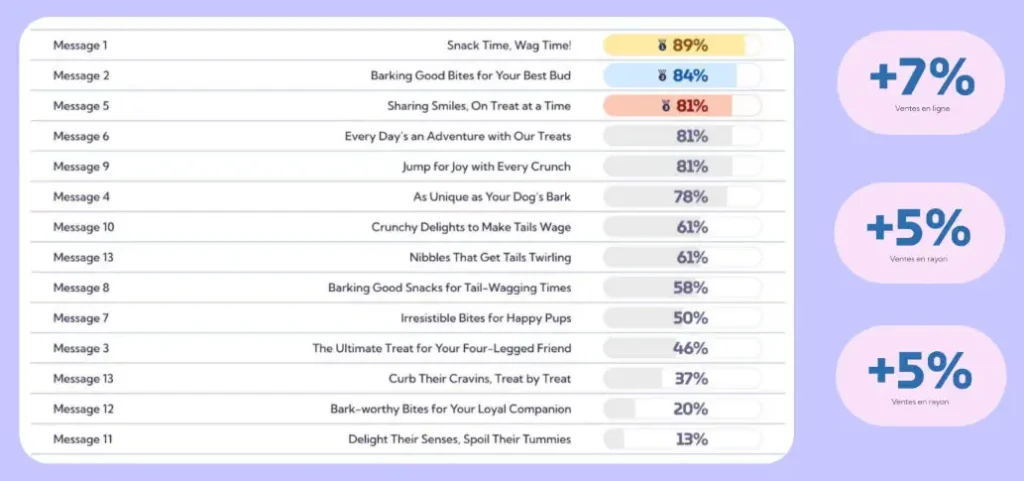
Example of result, some explaination

Yariv Levy, PhD
VP of Technology

Lorem ipsum dolor sit amet, consectetur adipiscing elit, sed do eiusmod tempor incididunt ut labore et dolore magna aliqua. Ut enim ad minim veniam, quis nostrud exercitation ullamco laboris nisi ut aliquip ex ea commodo consequat. Duis aute irure dolor in reprehenderit in voluptate velit esse cillum dolore eu fugiat nulla pariatur. Excepteur sint occaecat cupidatat non proident, sunt in culpa qui officia deserunt mollit anim id est laborum.

Lorem ipsum dolor sit amet, consectetur adipiscing elit, sed do eiusmod tempor incididunt ut labore et dolore magna aliqua. Ut enim ad minim veniam, quis nostrud exercitation ullamco laboris nisi ut aliquip ex ea commodo consequat. Duis aute irure dolor in reprehenderit in voluptate velit esse cillum dolore eu fugiat nulla pariatur. Excepteur sint occaecat cupidatat non proident, sunt in culpa qui officia deserunt mollit anim id est laborum

Moshe Vaizman
VP of Operations and 

Business Development

Lorem ipsum dolor sit amet, consectetur adipiscing elit, sed do eiusmod tempor incididunt ut labore et dolore magna aliqua. Ut enim ad minim veniam, quis nostrud exercitation ullamco laboris nisi ut aliquip ex ea commodo consequat. Duis aute irure dolor in reprehenderit in voluptate velit esse cillum dolore eu fugiat nulla pariatur. Excepteur sint occaecat cupidatat non proident, sunt in culpa qui officia deserunt mollit anim id est laborum.

Lorem ipsum dolor sit amet, consectetur adipiscing elit, sed do eiusmod tempor incididunt ut labore et dolore magna aliqua. Ut enim ad minim veniam, quis nostrud exercitation ullamco laboris nisi ut aliquip ex ea commodo consequat. Duis aute irure dolor in reprehenderit in voluptate velit esse cillum dolore eu fugiat nulla pariatur. Excepteur sint occaecat cupidatat non proident, sunt in culpa qui officia deserunt mollit anim id est laborum

Iris Levy
VP of Marketing

Lorem ipsum dolor sit amet, consectetur adipiscing elit, sed do eiusmod tempor incididunt ut labore et dolore magna aliqua. Ut enim ad minim veniam, quis nostrud exercitation ullamco laboris nisi ut aliquip ex ea commodo consequat. Duis aute irure dolor in reprehenderit in voluptate velit esse cillum dolore eu fugiat nulla pariatur. Excepteur sint occaecat cupidatat non proident, sunt in culpa qui officia deserunt mollit anim id est laborum.

Lorem ipsum dolor sit amet, consectetur adipiscing elit, sed do eiusmod tempor incididunt ut labore et dolore magna aliqua. Ut enim ad minim veniam, quis nostrud exercitation ullamco laboris nisi ut aliquip ex ea commodo consequat. Duis aute irure dolor in reprehenderit in voluptate velit esse cillum dolore eu fugiat nulla pariatur. Excepteur sint occaecat cupidatat non proident, sunt in culpa qui officia deserunt mollit anim id est laborum

Cindy Ford, PhD
VP of Customer Success

Lorem ipsum dolor sit amet, consectetur adipiscing elit, sed do eiusmod tempor incididunt ut labore et dolore magna aliqua. Ut enim ad minim veniam, quis nostrud exercitation ullamco laboris nisi ut aliquip ex ea commodo consequat. Duis aute irure dolor in reprehenderit in voluptate velit esse cillum dolore eu fugiat nulla pariatur. Excepteur sint occaecat cupidatat non proident, sunt in culpa qui officia deserunt mollit anim id est laborum.

Lorem ipsum dolor sit amet, consectetur adipiscing elit, sed do eiusmod tempor incididunt ut labore et dolore magna aliqua. Ut enim ad minim veniam, quis nostrud exercitation ullamco laboris nisi ut aliquip ex ea commodo consequat. Duis aute irure dolor in reprehenderit in voluptate velit esse cillum dolore eu fugiat nulla pariatur. Excepteur sint occaecat cupidatat non proident, sunt in culpa qui officia deserunt mollit anim id est laborum

Marc Uldry, PhD
Co-Founder / VP of Product

Lorem ipsum dolor sit amet, consectetur adipiscing elit, sed do eiusmod tempor incididunt ut labore et dolore magna aliqua. Ut enim ad minim veniam, quis nostrud exercitation ullamco laboris nisi ut aliquip ex ea commodo consequat. Duis aute irure dolor in reprehenderit in voluptate velit esse cillum dolore eu fugiat nulla pariatur. Excepteur sint occaecat cupidatat non proident, sunt in culpa qui officia deserunt mollit anim id est laborum.

Lorem ipsum dolor sit amet, consectetur adipiscing elit, sed do eiusmod tempor incididunt ut labore et dolore magna aliqua. Ut enim ad minim veniam, quis nostrud exercitation ullamco laboris nisi ut aliquip ex ea commodo consequat. Duis aute irure dolor in reprehenderit in voluptate velit esse cillum dolore eu fugiat nulla pariatur. Excepteur sint occaecat cupidatat non proident, sunt in culpa qui officia deserunt mollit anim id est laborum

Valerie Severin, PhD
Co-Founder / VP of Finance

Lorem ipsum dolor sit amet, consectetur adipiscing elit, sed do eiusmod tempor incididunt ut labore et dolore magna aliqua. Ut enim ad minim veniam, quis nostrud exercitation ullamco laboris nisi ut aliquip ex ea commodo consequat. Duis aute irure dolor in reprehenderit in voluptate velit esse cillum dolore eu fugiat nulla pariatur. Excepteur sint occaecat cupidatat non proident, sunt in culpa qui officia deserunt mollit anim id est laborum.

Lorem ipsum dolor sit amet, consectetur adipiscing elit, sed do eiusmod tempor incididunt ut labore et dolore magna aliqua. Ut enim ad minim veniam, quis nostrud exercitation ullamco laboris nisi ut aliquip ex ea commodo consequat. Duis aute irure dolor in reprehenderit in voluptate velit esse cillum dolore eu fugiat nulla pariatur. Excepteur sint occaecat cupidatat non proident, sunt in culpa qui officia deserunt mollit anim id est laborum

MaxDiff, or Best-Worst Scaling (BWS), is a remarkably insightful and productive measurement method used widely by researchers and practitioners across social science, business, and other disciplines. It is often preferred over traditional rating scales because it is effective at capturing preferences with known measurement properties.

Here is a comprehensive explanation of Best-Worst Scaling (BWS) and its origins as MaxDiff:

  1. Definition and Core Mechanism

Best-Worst Scaling (BWS) is defined as an extension of the method of paired comparison to multiple choices. The fundamental task requires participants to evaluate a collection, or “set,” containing three or more items or options. From this set, the participant must choose:

  • The best (or most attractive/most preferred) option.
  • The worst (or least attractive/least preferred) option.

The terms “best” and “worst” are considered metaphors representing the extremes of an underlying, latent, subjective continuum of interest.

By collecting both extreme choices from a set, BWS obtains extra choice information. Crucially, this method gathers valuable information about both the attractive options (via the “best” choices) and the less attractive options (via the “worst” choices), providing richer insights into the respondent’s utility function.

  1. Nomenclature and History (MaxDiff vs. BWS)

The terms MaxDiff and BWS refer to the same technique, though BWS is now the generally accepted name, particularly within academic circles.

  • Origin as MaxDiff: The approach was pioneered by Jordan J. Louviere, who developed it in 1987. He initially called it “maximum difference scaling” (or “MaxDiff”).
  • Hypothesized Process: This original name reflected Louviere’s hypothesis that the underlying decision process involved choosing the pair of options that exhibited the largest subjective difference on the latent scale of interest. The two chosen options (best and worst) would thus be maximally different.
  • Shift to BWS: The name was subsequently changed to Best-Worst Scaling because subsequent academic research demonstrated that individuals generally do not use a maximum difference choice process to perform the task. BWS is considered a more inclusive general term, as MaxDiff only represents one of several possible psychological processes a person might use to provide best-worst data.
  1. Advantages over Rating Scales

A significant benefit of using BWS is its ability to avoid many problems inherent to traditional rating scales.

  • Forced Discrimination: BWS forces respondents to discriminate between items by selecting only one best and one worst option, thereby reducing response biases (such as acquiescence bias or consistently using only mid-points or end-points of a scale).
  • Measurement Properties: BWS offers a theoretical framework to measure latent, subjective quantities. The derived measurement values possess known properties—specifically, they often produce ratio-level scales (if specific conditions regarding choice probabilities are met).
  • Simplicity and Quality: The task itself is simple and undemanding for respondents, which typically improves data quality.
  1. Theoretical and Analytical Foundation

The conceptual framework underpinning BWS is random utility theory (RUT). RUT assumes that when people choose repeatedly, their observed choice frequencies indicate how much they value the items under consideration.

Analytically, BWS often involves straightforward calculations, making it accessible even for practitioners with minimal prior knowledge. A simple way to summarize the data is by calculating best-minus-worst scores for each option, which is the count of times an item was chosen as “best” minus the count of times it was chosen as “worst”.

These best-minus-worst scores empirically correlate highly with estimates from more sophisticated models, often serving as a sufficient statistic for conditional logit regression models if the MaxDiff model holds.

  1. Categorization of Applications

BWS applications are typically divided into three main classes, differing based on the complexity of the items being evaluated:

Case

Name

Description of Items

Choice Task Focus

Case 1

The Object Case

Simple items, objects, statements, or people.

Measuring a list of items on a single underlying subjective scale (e.g., measuring priority, importance, or agreement).

Case 2

The Profile Case

Attribute levels described/displayed as a single profile (a combination of attribute levels).

Choosing the best and worst attribute levelswithin a single profile.

Case 3

The Multi-Profile Case

Sets of three or more profiles (each profile being a complex combination of attributes and levels, akin to a traditional DCE).

Choosing the best and worst whole profiles (options) among multiple choices.

In summary, BWS is an invaluable choice-based measurement method that leverages the finding that individuals are highly reliable and accurate when identifying extreme options. It moves beyond the MaxDiff hypothesis to provide a robust framework for measuring subjective preferences.

Reference: Louviere, J. J., Flynn, T. N. & Marley, A. A. J. Best–Worst Scaling:Theory, Methods, and Applications (Cambridge Univ. Press, 2015).


Pierre Uldry, PhD
CEO / Founder

Pierre, originally from Switzerland, began his journey as an economist before transitioning into marketing, statistics, and becoming a self-taught programmer.
He moved to Australia to pursue his PhD at the University of Sydney, studying under the guidance of Professor Jordan Louviere, the mastermind behind BWS, nowadays MaxDiff. In a significant contribution, Pierre introduced the dual response to this technology. With a solid foundation in mathematics, he’s dedicated over two decades to discrete choice modeling, consistently thinking outside the box.
Passionate about movies, running, and his former stint as a Swiss mogul skier, he’s deeply connected to Australia, where he
continues to reside. His expertise in Bayesian Methods has seen him craft processes for diverse industries and tailor models for numerous studies

How does it work?

1. Reach out

You: Fill out our form and tell us what you’d like to test.

We: Review your request and confirm feasibility.

2.⁠ ⁠Free Consultation

You: Join a 30-minute call to discuss your study.

We: Design and launch your study.

3.⁠ ⁠Approval

You: Approve the quote and study plan.

We: We design and launch the study.

4. Results

You: Sit back and relax — your insights are on the way.

We: Collect the data, analyze it, and share your report.